
📅 Publicado el: August 5, 2025
🔄 Última actualización: August 5, 2025
Who Cares for the Caregiver? The Goalkeeper's Mental Health
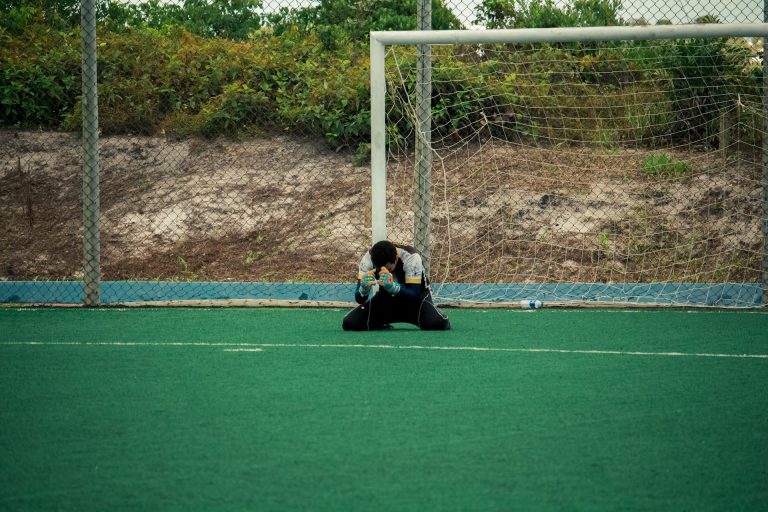
In the world of football, there is constant talk about physical performance, tactics, and technique, but rarely is a fundamental aspect addressed with the seriousness it deserves: the goalkeeper's mental health.
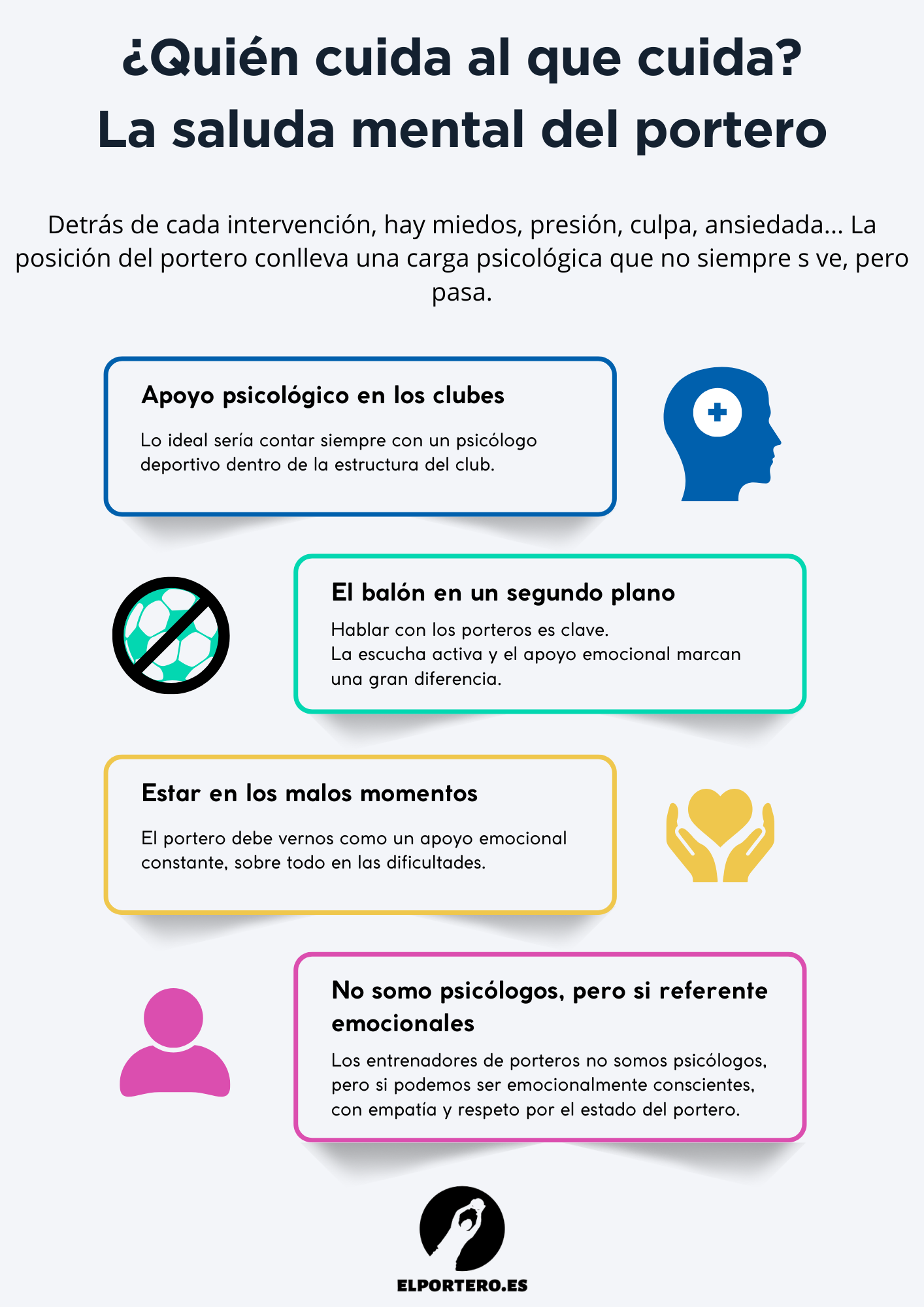
Behind every intervention, every save, every mistake, lies a universe of emotions: fear, pressure, guilt, anxiety... The goalkeeper's position on the field is unique, and with it comes a psychological burden that isn't always visible, but that weighs heavily.
The urgent need for psychological support in clubs
Ideally, there should always be a sports psychologist within the club structure. A professional who supports players in their mental and emotional development. But we know that in the vast majority of teams—especially in youth and amateur categories—that figure simply doesn't exist.
Faced with this deficiency, we are the goalkeeping coaches who must develop certain basic psychological skills, not to replace the professional (because we cannot and should not), but to accompany, contain and detect warning signs in our goalkeepers.
When the ball is not the most important thing
As coaches, we often need to understand that ball training time can take a backseat. If a goalkeeper isn't mentally sound, it's hard to perform at their best, no matter how good their technique or physical condition is.
That's why spending a few minutes during the session talking with goalkeepers, whether in a group or individually, can be more valuable than a shootout. Conversation, active listening, and emotional support are key tools that, while not a substitute for a psychologist, make a big difference.
The mind, the source of many errors and indecisions
The vast majority of fears, indecisions, blockages, or feelings of guilt arise in the brain. Therefore, as coaches, we must be attentive and committed to this aspect. It's not about providing magic solutions, but rather about creating spaces where the goalkeeper can express what they feel and accompanying them in the process of understanding and managing it.
Sometimes, a simple question can help a goalkeeper identify their own problem. And if they can find a solution on their own, with our support, that learning is far more valuable than external correction.
To give an example (real fact)
A long-range free kick, with the team defending on the edge of the box and the goalkeeper slightly out of position, looking to intervene with a diving shot far from his own goal. The play ends in a goal from a direct and unpredictable shot.
From there, a factor appears that is not always trained: the emotional pressure caused by the lack of understanding of teammates, the public and the environment. In amateur categories, this is amplified, because the error does not stay on the field: it is commented on in the stands, on the street, on social networks... and that can generate a feeling of guilt and pressure that is difficult to manage.
How was this situation addressed? We talked to the goalkeeper after the match, but without paying direct attention to the mistake, as he was fully aware of what had happened. At the time, the most sensible thing to do was not to add to the emotional situation and to ask him to talk calmly at the next training session.
However, the next day, the goalkeeper called me. The club environment and the persistent comments had intensified his guilt, and he needed to vent.
I'm not going to transcribe the conversation, but just listening to him and understanding the reason for his decision—as long as that reasoning is coherent, as it was in this case—was enough to alleviate some of that emotional burden. And if, in addition, it is accompanied by some words of support or reassurance, like:
“Don’t let that play overshadow the rest of your game or what you’re doing, because I’m happy with you,”
Then the positive impact is even greater. Pressure is reduced, guilt is alleviated, and confidence is reinforced. Because sometimes, that's exactly what the goalkeeper needs: understanding, support, and a voice to remind them that one mistake doesn't define their entire performance.
Being there in bad times
The goalkeeper should see us as a constant emotional support, not only when everything is going well, but, above all, when mistakes, doubts, and difficult days arise. That's where the bond of trust is strengthened.
Often, a technical or tactical solution isn't necessary. It's enough to listen, understand, not judge, and show genuine support. This attitude from the coach can make the difference between a goalkeeper who sinks emotionally or one who overcomes the slump and continues to grow.
We are not psychologists, but we are emotional referents.
It's important to repeat: we are not psychologists, and we should never pretend to be. But we can and should be emotionally aware coaches. Empathy, understanding, and respect for the goalkeeper's mental state are just as important as teaching them how to block a ball.
It's not about having all the answers, but rather about being available, actively listening, and acting sensitively. Because often, a small gesture has a big impact: a supportive phrase, a post-workout chat, or simply being there.
Conclusion: taking care of the mind is taking care of performance
A goalkeeper's mental health is not a secondary aspect; it's an essential part of their performance and development. As goalkeeping coaches, we are in a privileged position to positively influence their emotional well-being, even if we are not psychology professionals.
That's why we must commit to learning, observing, listening, and providing support when it's most needed. Because caring for the caregiver—in this case, the goalkeeper—is a responsibility we can't ignore.
And you, coach, the next time a goalkeeper makes a mistake or gets blocked, remember that sometimes the most valuable thing you can offer is not a technical correction, but your presence, understanding and human support.
 English
  Spanish