
📅 Publicado el: August 20, 2025
🔄 Última actualización: August 20, 2025
What field coaches never understand about the goalkeeper
In football, there's one figure who is often misunderstood, unfairly criticized, and poorly understood: the goalkeeper. From the outside, it seems like the goalkeeper is just "one more" on the team, with duties that can be evaluated the same as any other position. But nothing could be further from the truth. Being a goalkeeper entails a tactical, technical, and, above all, mental burden that completely separates them from the rest. And yet, not only many field coaches, but also fans and teammates, still don't understand how their world really works.
When this lack of understanding translates into unfair criticism, it not only damages the goalkeeper's confidence, but also undermines team cohesion. Often, what is said as a correction ends up being a way to disavow decisions that only the goalkeeper, from his unique perspective, can make sound judgment.
This is something that is clearly observed in the fundamental error in the learning of the goalkeeper, where trust and understanding play an essential role.
Decisions that are not seen from the sidelines
One of the most common mistakes coaches and field players make is assuming that what they see from the outside is enough to judge a goalkeeper's action. But what many don't understand is that the goalkeeper plays from a completely different angle. What seems obvious from the touchline is rarely so inside the box.
Goalkeepers are often criticized for not coming out to clear a ball with their feet. From the stands or the bench, this move may seem clear, even "easy." But in reality, there are factors that completely influence the goalkeeper's decision: the bounce of the ball, the type of turf, the speed of the opposing striker, the moment of the match, or even their own confidence in that split second. Not coming out doesn't mean passivity; often, it's simply the safest option.
If you want to delve deeper into how a goalkeeper acts throughout the match, you can read what a goalkeeper really does throughout the match.
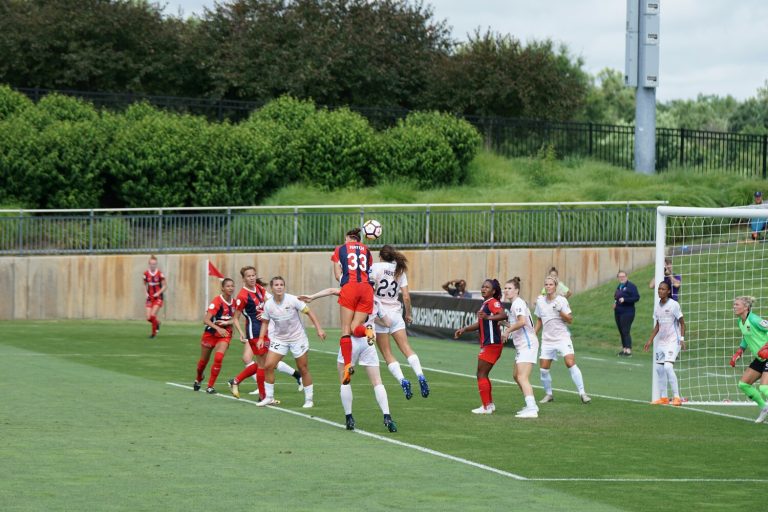
The aerial game: between risk and prudence
Another common situation is the cross into the box. The ball flies in, and everyone expects the goalkeeper to come out. If he doesn't, he'll likely receive a disapproving look from the bench or a direct rebuke from a teammate. But was it really his?
Jumping for an aerial ball in the middle of a tangle of players, with the risk of colliding, missing the target, or leaving an empty net, is not a decision to be taken lightly. The goalkeeper instantly assesses the ball's trajectory, the location of his teammates and opponents, the time available, and his own distance from the ball. Sometimes he goes out, sometimes he doesn't. And in either case, he does so responsibly, not on a whim.
If you are interested in improving in this aspect, we recommend that you review common mistakes and key steps to succeed in the aerial game.
The goalkeeper is in charge: the importance of respecting his decision
It's not uncommon to see defenders throw up their arms, turn away in frustration, or demand a release that didn't happen. That reaction, while emotionally understandable, reflects a lack of understanding of how the hierarchy in the box should operate. The reality is simple: the goalkeeper should have the final say.
He sees the game from the front. He feels whether he can reach it or not. He assumes all the risk if he misses. Allowing defenders to challenge or influence his decisions only creates doubt. And a goalkeeper who hesitates is a goalkeeper who loses effectiveness. Mutual trust, based on respect for each other's decisions, is key to a strong defensive unit.
The barrier and other decisions that are not so obvious
The number of players the goalkeeper places in the wall during a free kick is also often criticized. Too many? Too few? Poorly positioned? But the truth is that this decision is loaded with small tactical details: the taker's profile, the shooting angle, the wind, visibility, the goalkeeper's own positioning, and their reflexes. There's no universal formula for all free kicks. There's a specific reading that the goalkeeper must make.
When that reading from the touchline is invalidated or something different from what the goalkeeper believes is correct is demanded, he is forced to act against his instinct. And that, in goal, often costs dearly.
That's why we suggest you take a look at how to place the barrier in football to understand the complexity of this task.
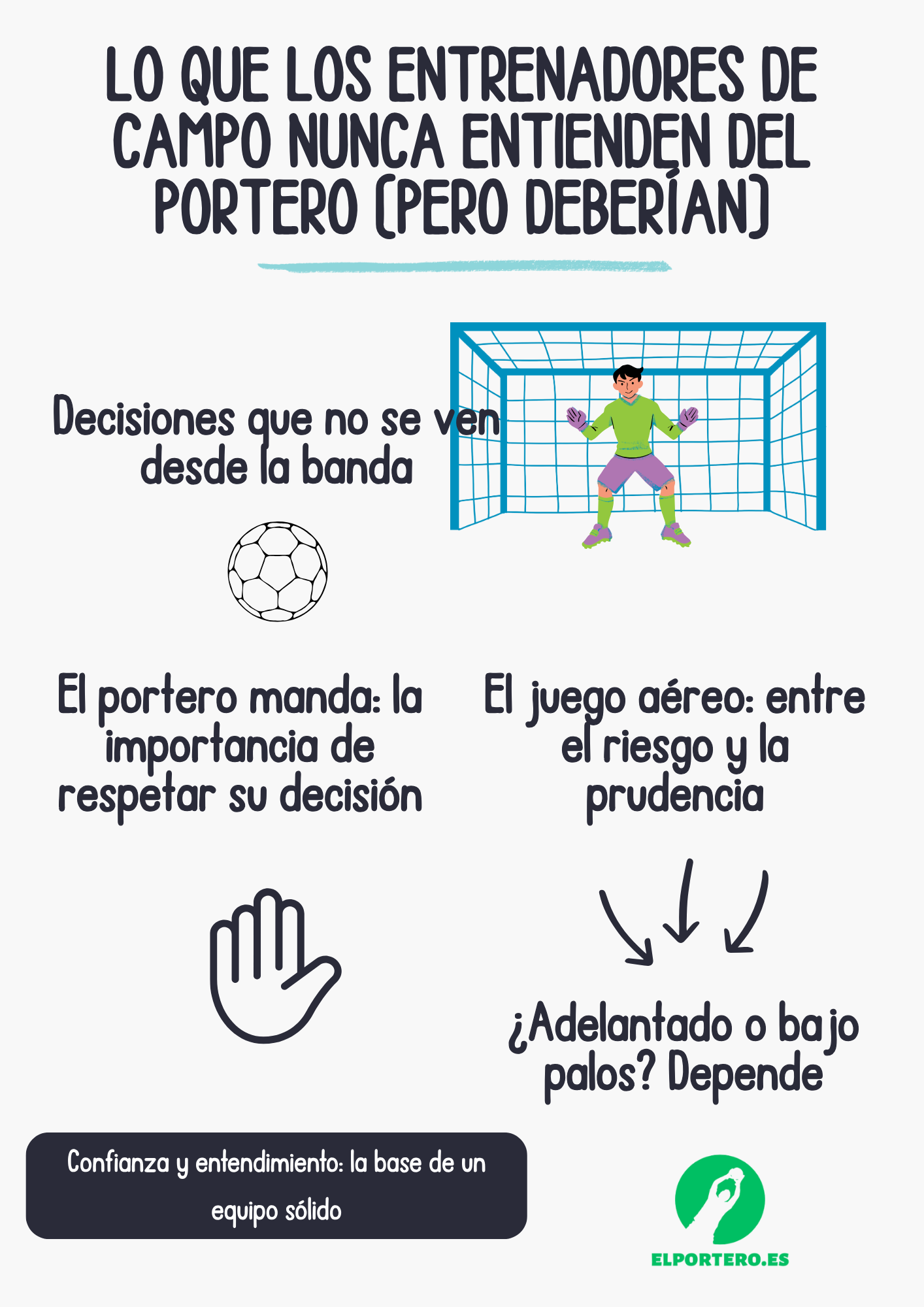
Up front or between the sticks? It depends.
Another common source of confusion is the goalkeeper's positioning during open play. Some coaches require them to play forward, almost like a sweeper, cutting off long balls and opening the play. Others prefer them to be closer to the line, more traditional. The curious thing is that, often, not even the coaching staff is clear about what they really want from the goalkeeper.
Ideally, that expectation should be adapted to the goalkeeper's profile, not the other way around. Because a goalkeeper who feels forced to act in a way that is not natural for him, does not perform the same. Playing forward or backward is not a question of courage, but of reading, confidence, and style. In fact, it is essential to understand how a goalkeeper should position himself according to the defense to optimize his performance. And that, again, can only be decided by the person defending the goal.
Just a few examples… of many more
It's important to note that these examples are not the only ones. There are many other situations in which the goalkeeper is questioned without really knowing the reasons behind his decisions. What's mentioned here—footed outs, aerial play, blocking, field position, criticism from teammates—are probably some of the most common, but they don't cover the full complexity of the position.
Every match brings new scenarios, every play has its own nuances. And every goalkeeper, as a human being and as a professional, responds to them in the best way possible with the information available at that moment. That's why it's essential for coaches, teammates, and fans to understand that what seems like an obvious mistake is often a logical decision from the goalkeeper's side.
Trust and understanding: the foundation of a solid team
The best gift a goalkeeper can receive isn't praise for a great save, but unconditional support when he makes a difficult decision. Being a goalkeeper isn't just about reflexes; it's about emotionally supporting the team in the most difficult moments. When a coach understands this and gives the team the freedom to decide, when the team respects the goalkeeper's judgment even if they don't share it, something much more important than a defensive line is built: it builds trust.
And in football, trusting your goalkeeper isn't an option. It's a necessity.
 English
  Spanish