
📅 Publicado el: October 9, 2025
🔄 Última actualización: October 9, 2025
How should a goalkeeping coach behave during training?
The role of the goalkeeping coach goes far beyond throwing balls or correcting technical errors. Their behavior and communication directly influence the goalkeeper's development, both physically and emotionally. However, there is still a belief—especially among some parents and fans—that a coach who shouts or raises his voice conveys more intensity. Nothing could be further from the truth.
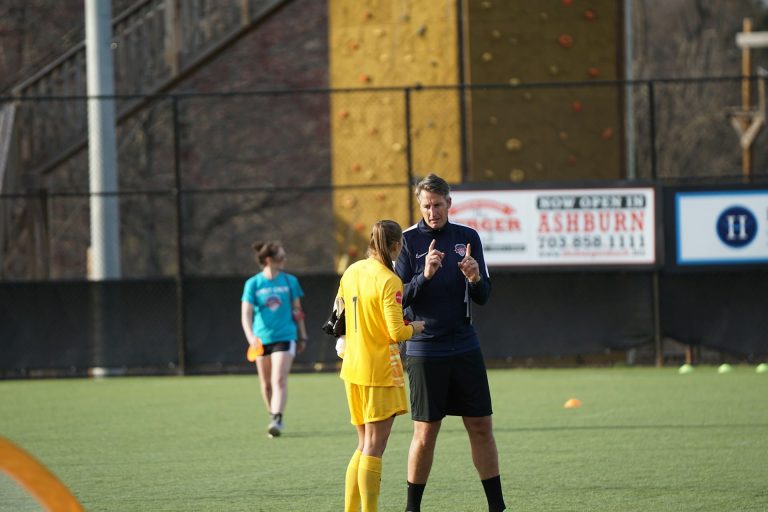
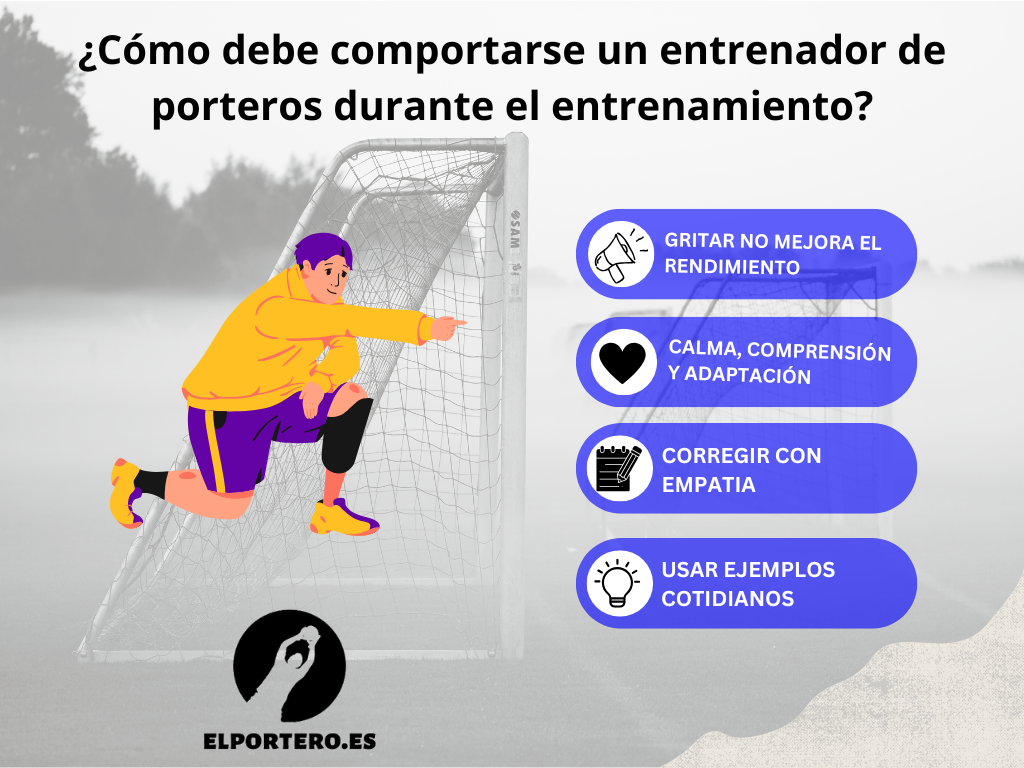
Yelling does not improve the goalkeeper's performance
One of the most common myths in grassroots football is that the more a coach shouts, the more professional or effective he or she is. This approach, far from motivating, can lead to blockage, frustration, or fear of making mistakes.
The intensity of a training session doesn't depend on the tone of voice, but on the quality of the exercises, the attention to detail, and the goalkeeping coach's ability to adapt to each player. Mistakes should be understood as a natural part of learning, not as an excuse to impose authority.
You can delve deeper into this idea in the article The fundamental error in learning.
Calm, understanding, and adaptation: the keys to a goalkeeping coach
A good goalkeeping coach should be calm, empathetic, and flexible. Every goalkeeper is different: they have their own pace, their own learning style, and their own way of reacting to mistakes. The coach must observe, listen, and adjust their message so that each goalkeeper feels understood and supported.
Controlling emotions, maintaining a respectful tone, and creating an environment of emotional safety helps the goalkeeper better assimilate corrections and train with greater confidence.
In addition, taking care of emotional well-being is essential. I recommend reading Who takes care of the caregiver? The mental health of the goalkeeper.
Correct with empathy and participation
Correction is an essential part of goalkeeper training, but it must be done with sensitivity and a didactic approach. It's not enough to simply point out what's wrong; you have to explain how to improve it and why.
It's important to acknowledge small steps forward, no matter how small they may seem. Reinforcing the positive before pointing out mistakes creates a climate of respect and openness. The goalkeeper feels valued, which improves their willingness to continue learning.
Furthermore, involving the goalkeeper in reflecting on their mistake—for example, by asking, "What do you think you could have done differently?"—is very beneficial. You can even open the group to participate, without pointing fingers, but rather to encourage shared learning. In the end, everyone makes mistakes, and sharing experiences enriches the group.
In this sense, it may be useful to read How to convince a goalkeeper that making a mistake is the first step towards success.
Use everyday examples to improve understanding
Sometimes, technical concepts are difficult to grasp if they're not explained clearly. In these cases, everyday examples can make all the difference. Comparing the way you position your hands when blocking a ball with holding binoculars, or talking about balance as if you were walking on a tightrope, are simple images that help the goalkeeper better understand what's being asked of them.
The clearer and more personal the message, the easier it will be for the goalkeeper to remember and apply it.
Encourage open communication
From day one, the coach should make it clear that goalkeepers can—and should—ask questions whenever they have questions, whether in training or during a match. Not everyone learns at the same pace, and repeating an explanation isn't a problem: it's part of the process.
Listening, answering questions without impatience, and explaining as many times as necessary reinforces the goalkeeper's confidence and ability to make decisions for themselves.
The coach also trains people
Especially in youth football, the goalkeeping coach not only develops athletes, but also people. Goalkeepers are vulnerable figures and need to learn to handle pressure, mistakes, and difficult moments.
That's why the coach must also help with the emotional aspect: teaching how not to get discouraged after a mistake, how to stay focused, and how to face challenges with a positive mindset. This is achieved with constant support, not yelling.
It is also key to avoid common mistakes in training, such as those analyzed in Frequent tactical errors in young goalkeepers.
When a goalkeeper feels safe, confident, and supported, not only does his performance improve, but also his attitude on the field.
Conclusion: teach better, not shout more
The goalkeeping coach should act as a guide, not a judge. Their mission is to build, not impose. Recognizing progress, correcting with empathy, involving the goalkeeper in their own learning, and fostering a participatory environment are key to effective coaching.
Developing goalkeepers capable of making decisions, taking risks, and growing means creating an environment where mistakes aren't punished, but understood. A place where everyone learns, shares, and evolves.
Ultimately, it's not about who shouts the loudest, but about who teaches the best.
 English
  Spanish