
📅 Publicado el: November 8, 2025
🔄 Última actualización: November 8, 2025
Angle reduction and the bisector in the football goalkeeper
In one-on-one situations or any shooting scenario, the goalkeeper's positioning is crucial. Two technical concepts explain much of the success or failure in these plays: angle reduction and the bisector. Both principles help the goalkeeper to occupy space intelligently, close down shooting lanes, and increase the likelihood of stopping the ball. Understanding and applying them correctly is fundamental to reaching a higher level of goalkeeping.
Reducing angles: controlling space and increasing the probability of success
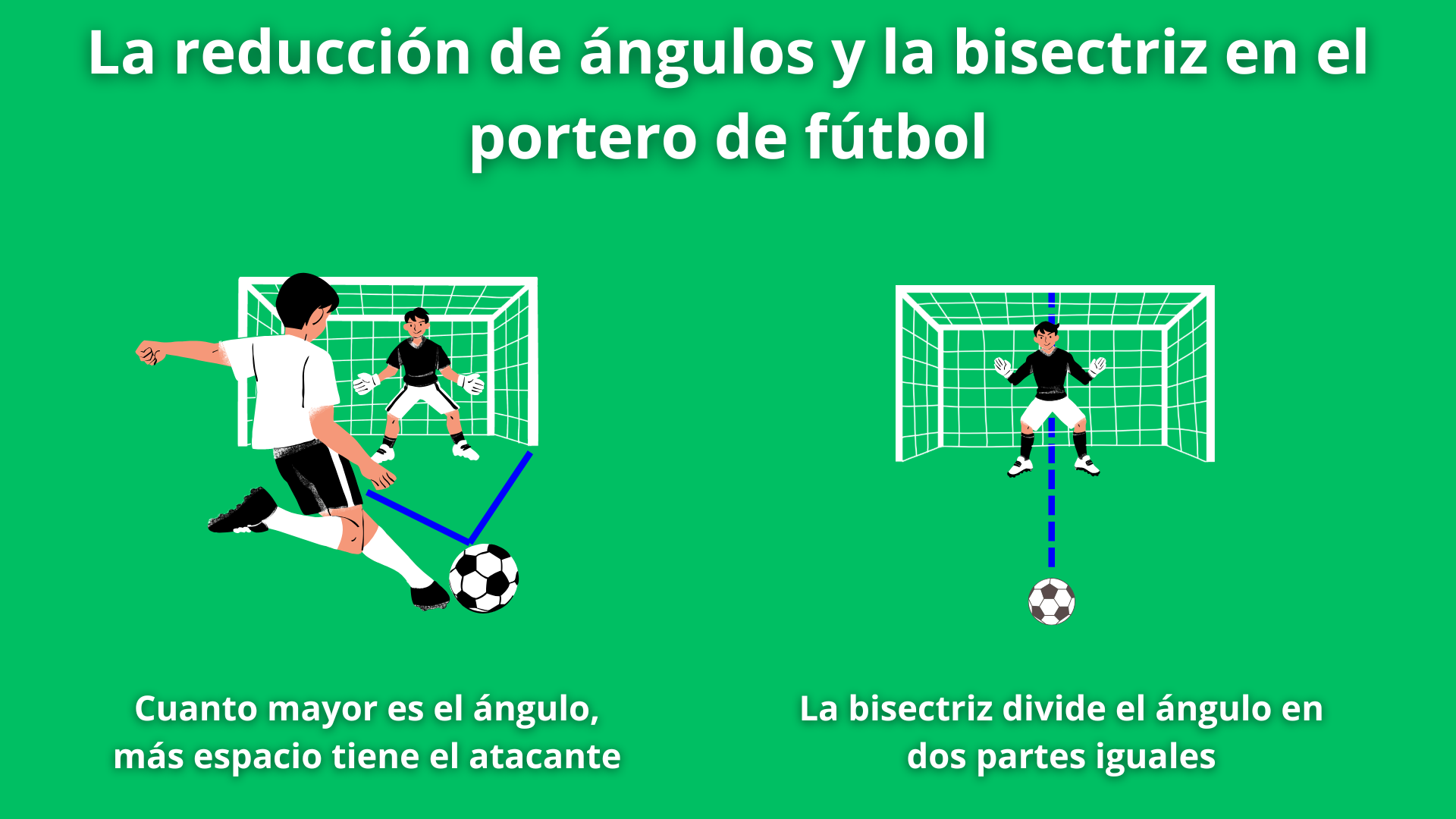
The angle reduction is a basic principle for goalkeepers based on a simple idea: the greater the angle between the ball and the posts, the greater the visible space for the attacker.
This means that if the goalkeeper stays very close to the goal line, they leave more of the goal area free for the opponent's shot.
Conversely, when the goalkeeper moves forward towards the ball, he reduces that angle and, in doing so, limits the space available to the attacker. The result is a smaller shooting zone and a greater probability of a successful save.
The challenge lies in finding the balance between reducing angles and maintaining reaction time. If the goalkeeper moves too far forward, he becomes vulnerable to a dribble or a high shot; if he retreats too far, he offers the attacker more options.
The bisector: the point of equilibrium between the ball and the goal
The angle bisector is the imaginary line that divides the angle formed between the ball and the two posts into two equal parts. In the context of the goalkeeper, this line represents the ideal position that allows equal coverage of both sides of the goal.
When the goalkeeper stays aligned on the bisector, he achieves a balanced and centered position. Conversely, if he moves away from it, he leaves one side more exposed, offering the attacker a clearer opportunity.
Therefore, the goalkeeper must constantly adjust his position following the movement of the ball. The reference point is not the opposing player, but the trajectory and location of the ball at any given moment.
How to combine angle reduction and the bisector
The combination of both principles is the basis of optimal positioning. The goalkeeper who masters angle reduction without losing sight of the bisector achieves a balanced, firm, and effective position against any shot attempt.
Some practical guidelines:
- Move forward decisively, but without rushing: reducing angles does not mean rushing forward, but cutting space in a controlled manner.
- Always keep the bisector as your reference: every movement should keep you centered between the ball and the posts.
- Adjust the distance according to the play: consider the speed of the ball, the proximity of the attacker and the possibility of passing or shooting.
- Train your game reading: anticipating the action is the key to getting to the exact spot before the shot.
Conclusion
Angle reduction and the bisector are essential tools for any goalkeeper looking to improve their positioning and effectiveness. Applied together, they allow for better control of space, limiting options for the attacker, and increasing the chances of a successful save.
Training these concepts consistently develops a smarter and more technical positioning, capable of making the difference in decisive game situations.
 English
  Spanish