
Why is it important to choose the right type of tacos?
For a goalkeeper, who needs to move quickly on the pitch, stop shots from different angles, and react to rebounds, cleats play a vital role. Choosing the right sole not only prevents injuries but also improves performance, especially in high-intensity situations.
The type of stud you choose depends directly on the type of ground you play on. Each field has different characteristics, and the best way to maintain good grip is to adapt your boots to the terrain. Below, we show you the four most common types of studs and which types of grass they are best suited for.
Types of studs on football boots
AG Cleats: Specially designed for modern artificial turf
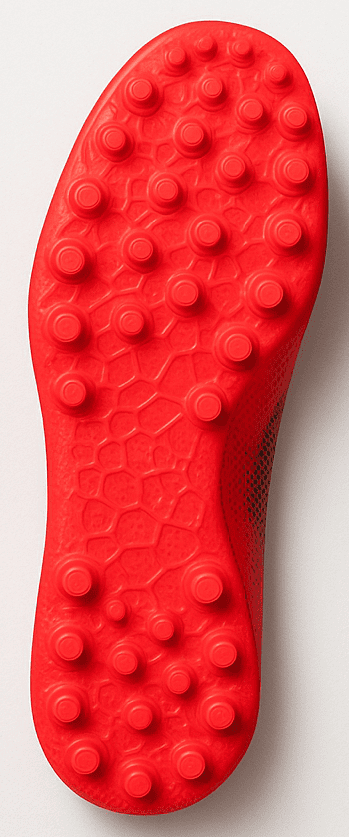
AG (Artificial Ground) studs are designed to fit modern artificial grass surfaces. These surfaces typically have a firmer, denser base, so AG studs are made to provide maximum grip without causing damage to the pitch or your boot.
Features of the AG Studded Boots:
Stud Distribution: The studs on the AG boots are short and numerous, ensuring balanced and consistent traction on high-quality artificial turf.
Advantages:
AG cleats have a design that perfectly fits modern, high-quality artificial turf fields (such as carpet-type turf or synthetic grass with rubber infill).
They distribute pressure evenly, providing consistent traction without damaging the field.
They are ideal for reducing impact on joints and providing stability on harder, firmer surfaces.
As a goalkeeper, if you play on new artificial turf fields, AG cleats offer you superior traction to move quickly without losing stability.
SG Cleats: For soft and wet natural grass
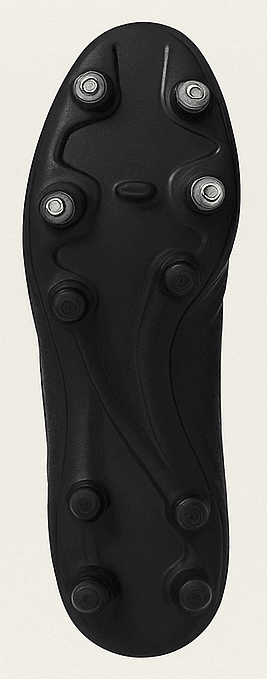
SG (Soft Ground) cleats are the perfect choice for soft or wet natural grass, which is common during the rainy months. These cleats are typically longer and mostly metal. The longer cleats allow for superior traction on wet, slippery ground.
Features of the SG Studded Boots:
- Lug pattern: The lugs on SG boots are longer and typically strategically placed to allow for greater penetration into soft ground, ensuring better grip in wet conditions.
- Advantages:
- They provide excellent traction on wet or muddy fields.
- The metal studs help to firmly grip the boot into the ground, preventing dangerous slipping.
- Perfect for players who need extra stability when the field is slippery.
If you're a goalkeeper and you face wet or muddy natural grass fields, the SG cleats will offer you exceptional control, preventing slipping and improving your movements in the area.
FG Cleats: For dry and firm natural grass
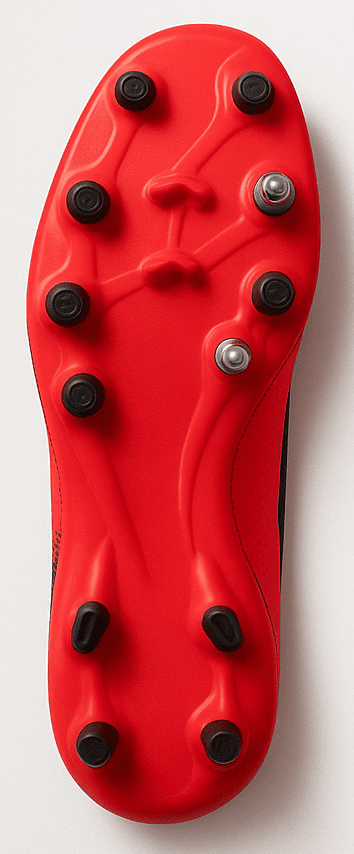
Firm Ground (FG) cleats are the most popular among soccer players. They're ideal for natural grass surfaces that aren't too dry or too wet. These cleats are usually made of plastic or molded rubber, with a pattern that provides a balanced grip on dry surfaces.
Features of the FG Cleats:
- Lug distribution: The lugs are medium-sized and evenly distributed across the entire sole, allowing for good grip on natural grass surfaces.
- Advantages:
- They provide an excellent balance between comfort and traction.
- Ideal for dry or slightly damp natural grass fields.
- The design of the studs allows for a quick change of direction, which is essential for a goalkeeper who needs to react quickly.
If you're a goalkeeper playing on a firm natural grass field, FG cleats will provide the support you need without compromising speed or comfort.
TF Cleats: Perfect for low-density artificial turf and hard surfaces
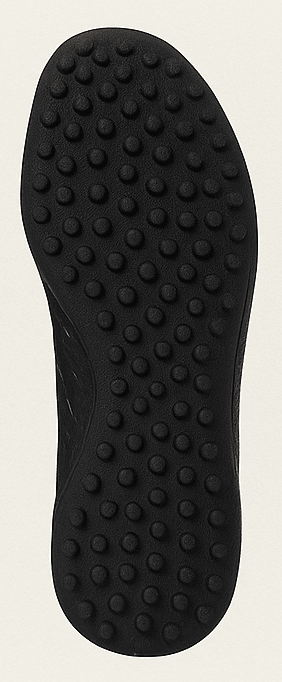
TF (Turf) cleats are specifically designed for low-density artificial turf and hard surfaces, such as 5-a-side or 7-a-side football pitches. Boots with TF cleats are perfect for pitches where the ground is harder and more compact, but without sacrificing comfort and performance.
Features of TF Cleats:
- Stud Distribution: The studs on the TF boots are small and numerous, allowing for consistent, balanced traction on hard and artificial turf surfaces.
- Advantages:
- They are ideal for older artificial turf pitches or those with hard surfaces, such as those used in 5-a-side football.
- The small and numerous studs allow the foot to better adapt to the terrain, providing greater control and stability during quick movements.
- The design of these cleats distributes weight evenly, helping to prevent impact injuries on hard ground.
If you play on 5-a-side football fields or on hard, low-density artificial turf, TF cleats are your best option to ensure good performance and comfort.
The type of cleats on your football boots is an important decision for a goalkeeper, as it directly influences stability and mobility during the game. Here we summarize the recommendations so you can make the best choice:
- TF Cleats: For low-density, hard artificial turf.
- FG Cleats: For dry or firm natural grass.
- AG Cleats: For modern artificial turf.
- SG Cleats: For soft or wet natural grass.
Remember, as a goalkeeper, you need a boot that provides stability, comfort, and quick reaction time. Choose the right sole for the pitch conditions to avoid injuries and improve your performance.
 English
  Spanish