
📅 Publicado el: April 16, 2025
🔄 Última actualización: August 3, 2025
Speed in soccer goalkeeping: Key to performance under pressure
In modern football, where matches are decided in milliseconds, the goalkeeper has become much more than a goalkeeper: he's an athlete with instant reaction, precise anticipation, and explosive movements. Although speed is often associated with running fast, in the case of the goalkeeper, we're talking about a much more complex and specific type of speed.
Developing different forms of speed is essential for a goalkeeper to react effectively to unexpected shots, changes in direction, or quick plays from the opposing team. In this article, we'll analyze the five key speed variations every goalkeeper should develop to perform at their best on the field.
Looking for a weekly plan for adult goalkeepers? We talked about it in How to plan a training session for adults.
What does “speed” mean to a goalkeeper?
Unlike other players, the goalkeeper does not need to travel great distances, but he must move accurately and quickly in tight spaces, react to visual stimuli, anticipate plays, and perform explosive actions to cover his goal.
Goalkeeper speed includes:
- Reaction speed
- Sideshift speed
- Anticipation speed
- Speed of change of direction
- Explosive speed
Training these variants not only improves performance, but also reduces the likelihood of errors in critical situations.

Types of speed that a goalkeeper should work on
1. Reaction speed
Description: It's the goalkeeper's ability to respond immediately to visual, auditory, or tactile stimuli. It's essential for stopping surprise shots or reacting to deflections.
Example in game: A close-range shot that changes trajectory at the last second demands an immediate response to reach the ball.
Recommended exercises:
- Games with visual stimuli (LED lights, colors).
- Balls thrown from unpredictable angles.
- Reactions to audible commands or quick gestures.
In our Reaction speed exercises section, you will find specific routines that address reaction speed exercises.
2. Lateral movement speed
Description: It is the ability to move quickly from side to side, covering the width of the goal without losing balance or vision of the game.
Example in game: A change of direction in an attack down the wings forces the goalkeeper to reposition himself in seconds to cover the shot.
Recommended exercises:
- Lateral displacements between cones.
- Agility ladder in horizontal movements.
- Ball exercises to keep your vision focused while moving.
3. Speed of anticipation
Description: It's about anticipating plays before they happen. While it's not physical speed, it does reduce reaction times by allowing you to make decisions in advance.
Example in game: In a one-on-one, anticipating where the shot will go can be the key to blocking the attempt.
Recommended exercises:
- Tactical simulations with quick decisions.
- Reading the opponent's body in 1v1 situations.
- Analysis of common shooting patterns.
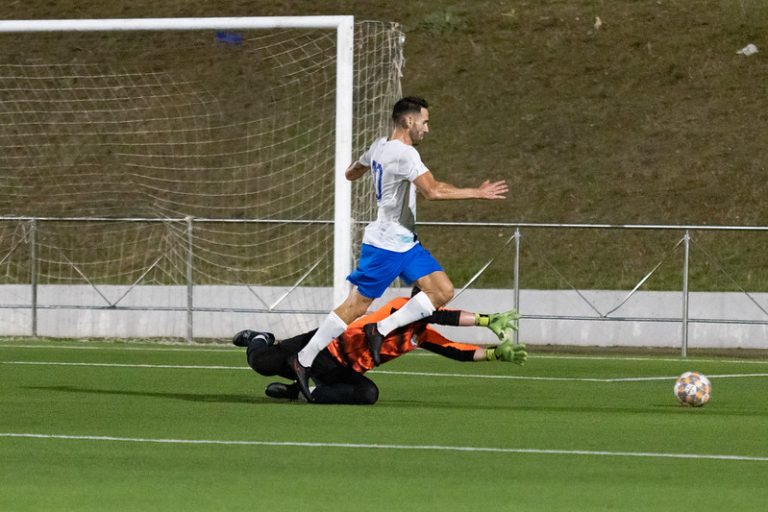
4. Speed of change of direction
Description: It involves making sudden and effective adjustments when the ball unexpectedly changes direction. This speed depends on agility, balance, and coordination.
Example in game: An attacker fakes a shot and then shoots to the other side. The goalkeeper must change direction in milliseconds.
Recommended exercises:
- Zigzag movements.
- Sprints with irregular trajectories.
- Exercises with cones and a ball in constant change of direction.
5. Explosive speed
Description: It is the ability to generate a powerful movement in a very short time, useful for launching, jumping or cutting a ball with force and speed.
Example in game: A save on a free kick where the goalkeeper dives toward the far corner in an instant.
Recommended exercises:
- Plyometrics with explosive jumps.
- Short starts with full acceleration.
- Controlled throws to both sides of the goal.

Benefits of speed training in goalkeepers
Developing these speed variants brings benefits that go beyond physical preparation:
- Increases confidence in one-on-one situations.
- Reduces the margin of error on quick or wide shots.
- Improves decision-making by gaining time to analyze plays.
- Optimize defensive positioning throughout the match.
- Reduces the risk of injury, thanks to better coordination and body control.
Conclusion
Speed, in all its forms, is an essential component of the modern goalkeeper. It's not just about moving quickly, but also about reacting, anticipating, and adapting with agility and precision to any game situation.
Remember to work:
- Reaction Speed
- Lateral Speed
- Anticipation Speed
- Change of Address
- Explosive Speed
Adjust the intensity and type of exercise according to the goalkeeper's age and level, and you'll see a significant improvement in their performance under pressure.
 English
  Spanish