
📅 Publicado el: septiembre 6, 2025
🔄 Última actualización: noviembre 3, 2025
La nueva regla de los 8 segundos para los porteros: todo lo que debes saber
¿Qué establece la nueva regla?
Hasta ahora, el reglamento indicaba que el portero no podía retener el balón con las manos durante más de seis segundos. Si lo hacía, el árbitro podía sancionar con un tiro libre indirecto a favor del equipo rival desde el lugar de la infracción. Sin embargo, esta disposición rara vez se aplicaba en la práctica. En la mayoría de los casos, los árbitros eran flexibles porque consideraban que conceder un libre indirecto dentro del área podía ser demasiado determinante en relación con la infracción.
La nueva norma cambia dos aspectos fundamentales:
- Tiempo límite ampliado a ocho segundos: el guardameta tendrá dos segundos adicionales para jugar el balón desde que el árbitro considere que tiene un “control claro” con las manos o brazos.
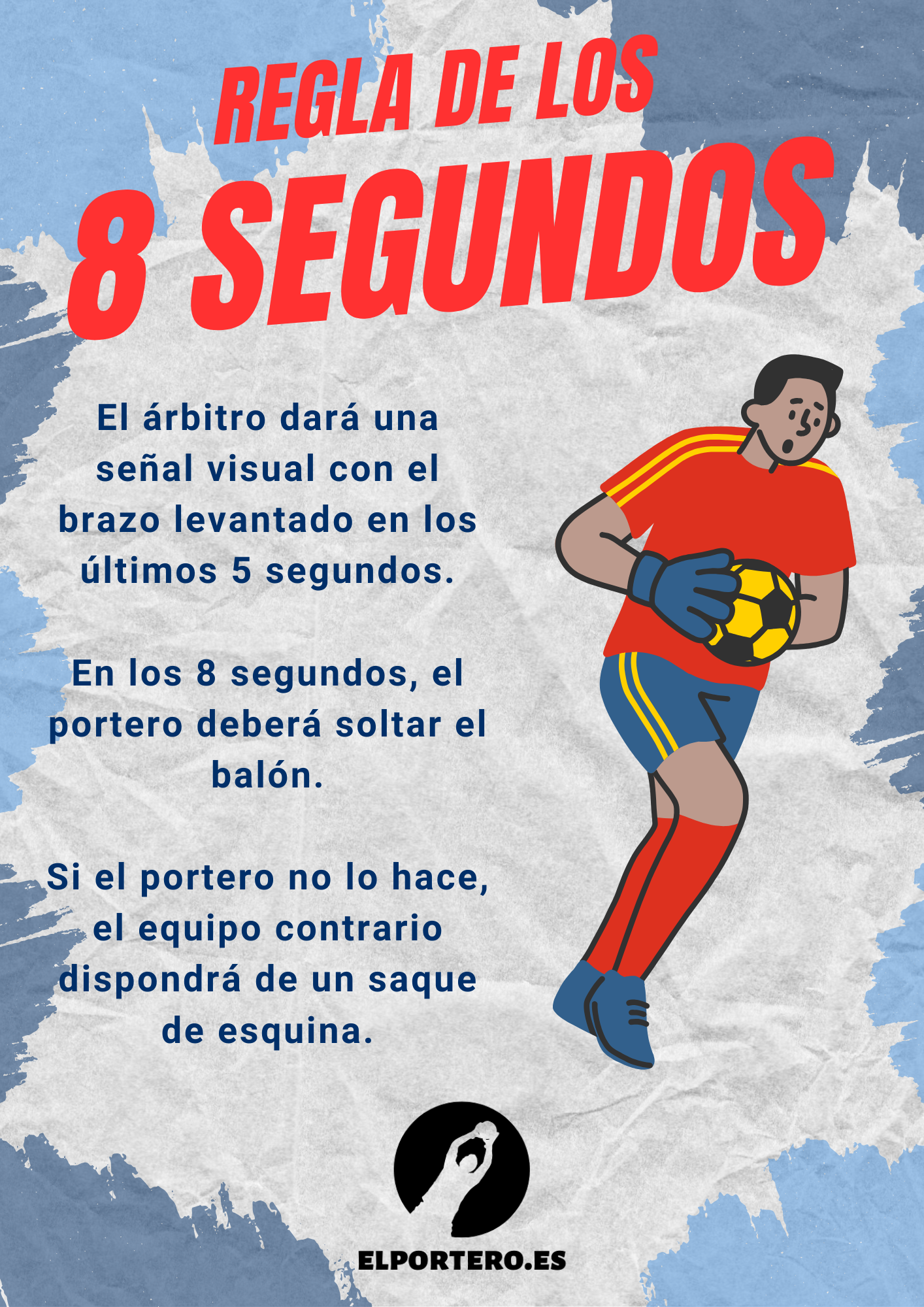
- Nueva sanción en caso de incumplimiento: si supera ese tiempo, el rival ya no recibe un libre indirecto, sino un saque de esquina a su favor.
Este cambio se aplicó oficialmente en todas las competiciones a partir de julio de 2025, aunque torneos como el Mundial de Clubes de la FIFA ya lo utilizaron de manera anticipada.
El fútbol es un deporte en constante evolución. Aunque sus bases se mantienen firmes, las autoridades encargadas de definir el reglamento —la IFAB (International Football Association Board)— revisan periódicamente las Reglas de Juego para garantizar que el espectáculo sea justo, dinámico y acorde con las exigencias actuales. Una de las modificaciones más llamativas que entró en vigor a partir del 1 de julio de 2025 es la conocida como «regla de los 8 segundos» para los porteros.
En este artículo exploraremos qué dice exactamente la norma, por qué se introdujo, cómo se aplica y cuáles han sido las reacciones del mundo del fútbol. Si eres aficionado, entrenador, jugador o simplemente un curioso del reglamento, esta guía te servirá para entender a fondo esta innovación.
¿Cómo se cuenta el tiempo?
El cronómetro invisible arranca en el momento en que el árbitro interpreta que el portero tiene control total de la pelota. A partir de ahí, el guardameta dispone de ocho segundos para soltarla, ya sea lanzando con la mano, despejando con el pie o cediéndola a un compañero.
Una de las novedades más interesantes es que el árbitro, durante los últimos cinco segundos, levantará el brazo para señalar de forma visual la cuenta regresiva. Así, tanto el portero como los jugadores y el público podrán ser conscientes del tiempo restante.
En caso de que el portero sea presionado o vea interrumpida su acción por un rival, el conteo se detendrá, evitando que una acción de juego normal termine injustamente en una sanción.
¿Por qué se introdujo esta modificación?
El principal objetivo es combatir la pérdida deliberada de tiempo. En la práctica, muchos porteros solían exceder el límite de seis segundos sin consecuencias. Esto provocaba interrupciones en el ritmo del partido y frustración en jugadores y espectadores.
Los estudios realizados por la IFAB en más de 400 partidos de prueba en Inglaterra, Italia y Malta demostraron que:
- Entre 1 y 4 segundos, el portero suele jugar rápido, buscando un contraataque.
- Entre 5 y 8 segundos, generalmente busca una opción de pase o está bajo cierta presión.
- Más de 8 segundos casi siempre significa pérdida deliberada de tiempo.
Además, el hecho de cambiar la sanción a un saque de esquina hace que el castigo sea más claro, visible y aceptado por todos los protagonistas. Un córner genera menos polémica que un tiro libre indirecto dentro del área, que muchas veces parecía un exceso para una falta de tiempo.
Primeras aplicaciones en torneos
La regla ya se puso a prueba en distintas competiciones. Durante el Campeonato Europeo Sub‑21, los árbitros aplicaron la cuenta de ocho segundos con buenos resultados. Los porteros se adaptaron rápido y el juego ganó fluidez.
En el Mundial de Clubes 2025, el árbitro Clément Turpin sancionó a un portero que superó los ocho segundos con un saque de esquina. Fue la primera gran aplicación en un torneo de élite y marcó un precedente que sin duda veremos repetido en la próxima temporada.
Reacciones del mundo del fútbol
La medida ha generado un intenso debate. Algunos exguardametas, como el inglés Paul Robinson, han criticado la norma, asegurando que está desconectada de la realidad del juego. Para ellos, el saque de esquina como sanción es desproporcionado y puede cambiar el curso de un partido por una acción mínima.
Por otro lado, otros expertos consideran que la modificación es positiva. Argumentan que se trata de una manera más efectiva de aplicar un límite que ya existía pero que era prácticamente ignorado. Además, recuerdan que el árbitro siempre puede detener la cuenta si detecta que el portero está siendo presionado, lo que da un margen razonable para situaciones de juego real.
Conclusión
La regla de los 8 segundos no es simplemente un ajuste numérico al tiempo de posesión de los guardametas, sino una apuesta clara por el dinamismo y la fluidez del juego. Al ampliar el plazo a ocho segundos y sustituir la sanción por un saque de esquina, la IFAB busca un equilibrio entre justicia deportiva y espectáculo.
Aunque no todos estén de acuerdo, lo cierto es que la modificación responde a una necesidad real: evitar las pérdidas de tiempo deliberadas y ofrecer un fútbol más atractivo para jugadores y espectadores. Los próximos meses serán clave para ver cómo se adapta la comunidad futbolística, pero lo que está claro es que los porteros ya no podrán dormir tranquilos con la pelota en las manos.