
📅 Publicado el: agosto 27, 2025
🔄 Última actualización: agosto 27, 2025
Lectura corporal del rival: Cómo anticipar disparos como portero
En el fútbol moderno, la figura del portero ha evolucionado enormemente. Ya no basta con tener buenos reflejos o una gran capacidad de salto; hoy en día, anticiparse a las jugadas se ha convertido en una de las habilidades más valiosas. En ese contexto, la lectura corporal del rival es una herramienta poderosa que puede marcar la diferencia entre un gol en contra y una atajada decisiva.
En este artículo exploraremos cómo leer la postura del lanzador permite al portero anticipar el tipo y dirección del disparo, y qué aspectos específicos debe observar para reaccionar de forma más eficaz.
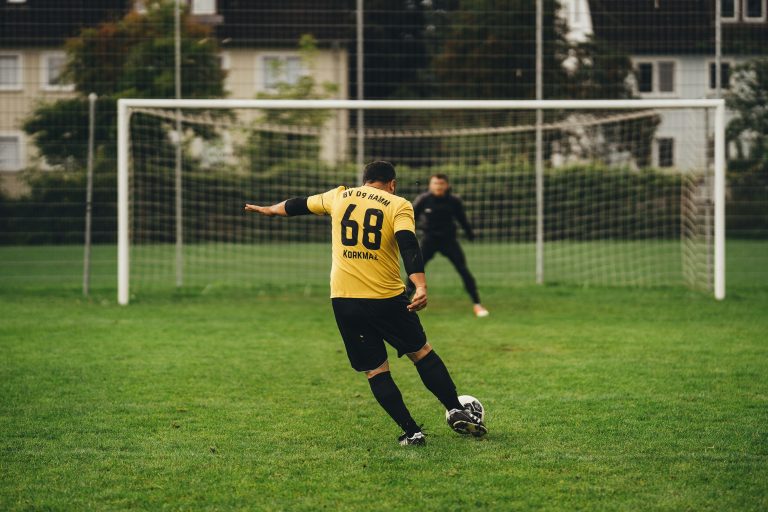
¿Por qué es clave la lectura corporal en el fútbol?
En una situación de disparo, el tiempo de reacción del portero es extremadamente reducido. El arquero dispone de muy poco tiempo para decidir y ejecutar una respuesta. Este margen tan estrecho convierte a la anticipación en una necesidad.
Ahí es donde entra la lectura corporal: identificar señales físicas en el tirador antes del disparo puede brindar una ventaja competitiva. Aunque no existen fórmulas mágicas, ciertos patrones en el cuerpo del rival suelen revelar intenciones sobre la dirección del tiro, lo que da al portero un segundo extra de ventaja en la toma de decisión.
Si quieres profundizar en cómo afecta la percepción del tiempo y el espacio en estas situaciones límite, te recomendamos este artículo:
El portero y el espacio-tiempo
El papel de la cadera: el gran indicador de dirección
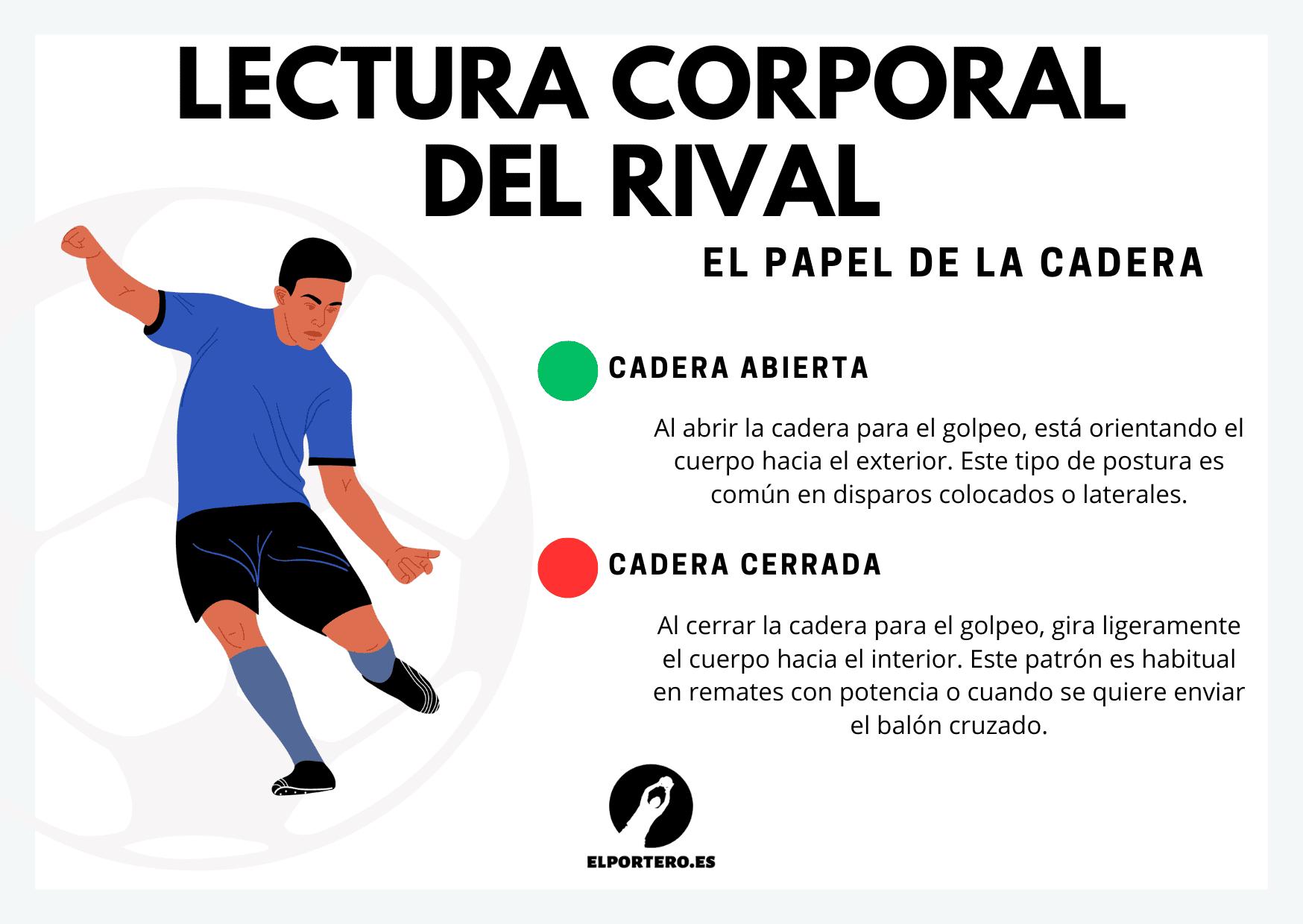
Uno de los elementos corporales más reveladores es la posición de la cadera en el momento del golpeo. Aunque el balón se golpea con el pie, la postura del cuerpo —especialmente de la cadera— tiene un impacto directo en la trayectoria final del disparo.
🟢 Cadera abierta
Cuando el jugador abre la cadera al golpear, está orientando el cuerpo hacia el exterior.
- Si es diestro, el disparo tenderá a ir hacia su derecha (el palo largo desde su perspectiva).
- Para un zurdo, será al lado izquierdo.
Este tipo de postura es común en disparos colocados o laterales, muchas veces buscando el palo más lejano del portero.
🔴 Cadera cerrada
En cambio, si el tirador cierra la cadera, girando ligeramente el cuerpo hacia el interior, el disparo suele ir cruzado.
- El cuerpo genera una torsión que envía el balón en diagonal, al palo opuesto de su pierna dominante.
Este patrón es habitual en remates con potencia o cuando se quiere sorprender al portero con un disparo cruzado.
Es importante entender que estos indicios no son absolutos. Algunos jugadores son capaces de manipular su cuerpo para engañar, pero en la gran mayoría de situaciones, el lenguaje corporal se manifiesta de manera automática y revela las verdaderas intenciones.
Ejemplos prácticos en el campo
Veamos algunos escenarios reales donde la lectura de la cadera puede ser decisiva:
- Penales: en el lanzamiento desde los 11 metros, muchos porteros estudian la orientación de la cadera del ejecutor justo antes del golpeo. Aunque algunos intentan disimularla, en el momento de golpear, el cuerpo se alinea con la trayectoria prevista.
- Disparos al borde del área: cuando un delantero recibe perfilado, el gesto técnico y la apertura de cadera suelen ser más evidentes. El portero atento puede anticipar y empezar a inclinar el peso hacia el lado más probable.
- Uno contra uno: en estos duelos, leer el cuerpo del atacante no solo permite anticipar el disparo, sino también decidir si salir, aguantar o lanzarse. La lectura corporal es clave para elegir el momento correcto.
¿Se puede entrenar esta habilidad?
Sí. A pesar de que muchos la asocian con el “instinto”, la lectura corporal es una habilidad que se entrena. Cuanto más expuesto esté un portero a situaciones reales de disparo, más fácil le será reconocer patrones corporales.
Algunas recomendaciones prácticas:
- Entrenamientos específicos con disparos reales: utiliza sesiones donde los lanzadores busquen distintas direcciones y el portero se enfoque únicamente en leer la postura del rival.
- Uso de vídeo: graba sesiones y revisa el comportamiento corporal de los lanzadores antes del disparo. El análisis repetido crea memoria visual.
- Observación activa en partidos: ya sea como espectador o en el campo, estudiar cómo se posicionan los jugadores en el momento de disparar refuerza la anticipación visual.
Puedes aplicar esta lectura corporal dentro de una metodología que incorpore variabilidad y adaptación. Aprende más aquí:
Variabilidad en el entrenamiento
También puedes complementar esta lectura con ejercicios específicos. Te dejamos una propuesta:
Ejercicios: caídas laterales
No es una fórmula mágica, pero sí una ventaja real
Debemos ser claros: leer la cadera no garantiza atajar el disparo. El fútbol está lleno de imprevistos, engaños y genialidades individuales. Sin embargo, en un alto número de los casos, la postura corporal anticipa lo que está por venir.
Por eso, la lectura corporal del rival es una de las herramientas más valiosas que puede incorporar un portero moderno a su repertorio táctico. Junto con una buena colocación, técnica de bloqueos y velocidad de reacción, esta habilidad mejora notablemente la efectividad bajo los tres palos.
Descubre cómo puedes optimizar este tipo de recursos técnicos a través de un proceso analítico estructurado:
Evolución del proceso analítico en la mejora de la técnica del portero
Conclusión: entender el cuerpo del rival para ganar milisegundos
En el fútbol, milisegundos pueden decidir partidos. Un portero que es capaz de interpretar correctamente la postura del lanzador parte con ventaja frente a uno que simplemente espera el disparo.
Invertir tiempo en entrenar la lectura corporal, especialmente la orientación de la cadera, es una apuesta segura para mejorar el rendimiento. No se trata de adivinar, sino de leer, interpretar y reaccionar antes de que el balón salga.
¿Quieres seguir mejorando tus habilidades como portero? Explora más contenidos en elportero.es y potencia tu entrenamiento con un enfoque basado en el análisis, la técnica y la intuición táctica.