
📅 Publicado el: octubre 21, 2025
🔄 Última actualización: octubre 29, 2025
Guía completa: Parada frontal en el portero de fútbol
En el fútbol, cada segundo cuenta y cada balón detenido puede cambiar el rumbo de un partido. Para el portero, la parada frontal es una de las técnicas más esenciales: un gesto que, cuando se realiza correctamente, asegura la posesión y protege la portería de manera efectiva. No se trata solo de reaccionar rápido, sino de adoptar la postura y la coordinación adecuadas para controlar el balón con seguridad, minimizando los riesgos de rebotes peligrosos.
En esta guía completa, analizaremos qué es la parada frontal, cómo se relaciona con la posición de base, y los detalles técnicos que todo portero debe dominar. Además, aprenderás un truco visual muy útil para posicionar correctamente las manos, mejorando la efectividad de la parada frontal y otras acciones defensivas.
¿Qué es la parada frontal?
La parada frontal se define como la acción que realiza el portero para detener un disparo que llega directamente hacia su cuerpo, generalmente a media o baja altura. A diferencia de otras técnicas como la estirada lateral o el blocaje, la parada frontal prioriza la seguridad del balón y la correcta retención, evitando que el rival aproveche un rebote.
Esta técnica requiere coordinación, precisión y posición corporal correcta, porque incluso un pequeño error en la colocación de las manos o la postura puede convertir una intervención aparentemente fácil en una oportunidad para el adversario. La parada frontal es, por tanto, un gesto técnico que combina técnica, reflejos y control mental.
La parada frontal y la posición de base: los pilares del portero
La posición de base y la parada frontal son los cimientos de la técnica del portero de fútbol. Desde la posición de base, el portero puede ejecutar cualquier acción defensiva: blocajes, despejes, estiradas o salidas. Es una postura activa que permite reaccionar ante cualquier disparo, con los pies ligeramente separados a la anchura de los hombros, rodillas flexionadas y el peso del cuerpo distribuido de manera equilibrada sobre las puntas de los pies. Puedes leer más sobre la posición de base en la página de técnica.
La parada frontal complementa esta posición. Una correcta ejecución no solo detiene el balón, sino que enseña al portero la colocación adecuada de manos y brazos, aspecto que luego se traslada a otras intervenciones técnicas. Dominar la parada frontal mejora automáticamente tu capacidad para realizar otras acciones defensivas con eficacia y seguridad.
Técnica de la parada frontal: dedos, manos y “prismáticos”
Uno de los detalles más importantes de la parada frontal es la posición de las manos. Para garantizar una retención segura del balón, se recomienda:
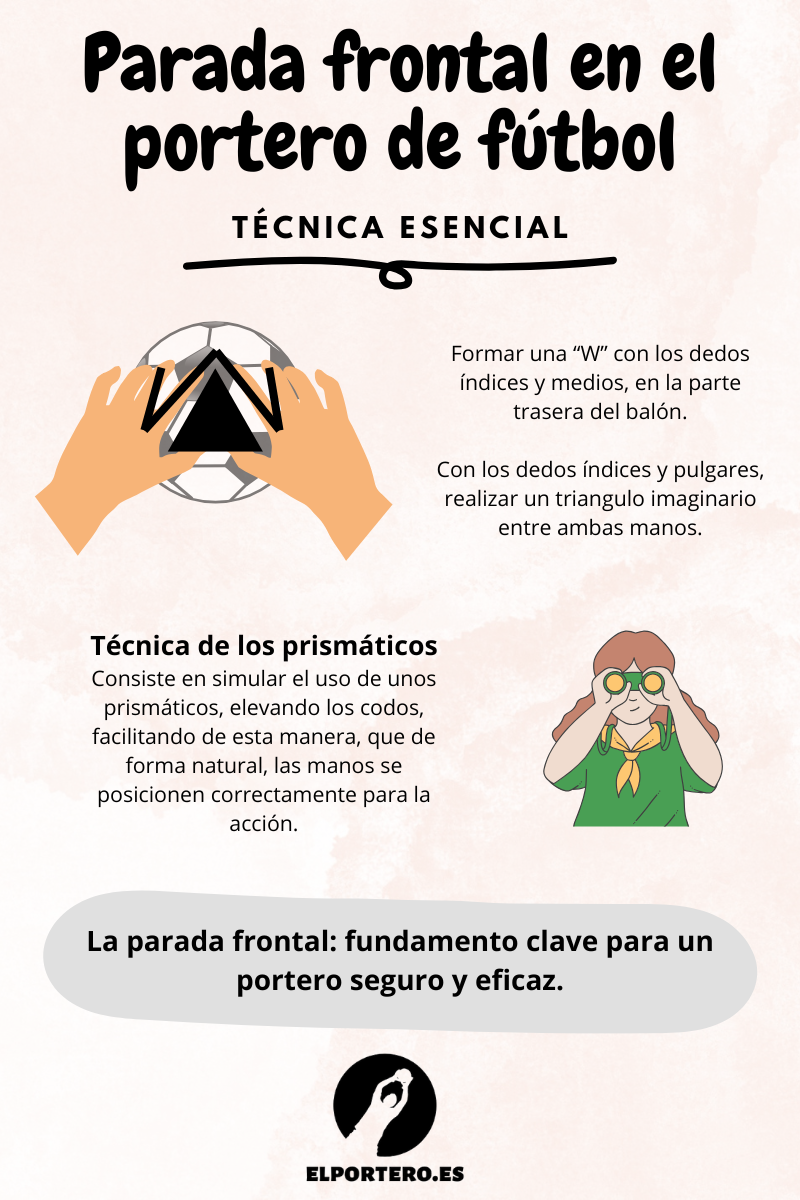
- Formar una “W” con los dedos en la parte trasera del balón. Esto significa que los dedos índices y medios se colocan de manera que crean una forma de W, envolviendo el balón y proporcionando estabilidad.
- Triángulo en la parte central del balón: los dedos índices y pulgares, junto con las palmas, forman un triángulo que ayuda a absorber la fuerza del disparo y mantener el control del balón.
El truco de los prismáticos
Para facilitar la correcta colocación de las manos, un truco visual muy útil es imaginar que estás sosteniendo unos prismáticos frente a los ojos. Al levantar los codos de manera lateral y natural, como si formaras la forma de los prismáticos, el gesto técnico se vuelve más cómodo y efectivo. Esto permite que las manos queden en la posición ideal para bloquear el balón, sin tensar los hombros ni comprometer la movilidad.
Además de las manos, la colocación de pies y rodillas es crucial. Al ejecutar la parada frontal, el portero debe:
- Mantener los pies firmes pero flexibles.
- Flexionar ligeramente las rodillas para amortiguar el impacto.
- Inclinar el tronco hacia el balón manteniendo la espalda recta para maximizar el control.
Con estos elementos combinados, la parada frontal deja de ser un simple gesto reflejo y se convierte en una técnica depurada y reproducible en cualquier situación de juego.
Consejos para mejorar la parada frontal
- Entrenar desde la posición de base: Antes de intentar paradas complejas, asegúrate de que tu postura inicial sea correcta.
- Repeticiones conscientes: Practica enfocándote en la forma de las manos y la colocación del cuerpo.
- Simulación de disparos reales: Balones lanzados a distintas alturas y velocidades ayudan a reaccionar de manera natural.
- Control visual: Mantén siempre la vista en el balón y anticipa su trayectoria.
- Fortalecimiento de muñecas y dedos: La fuerza en estas zonas mejora la estabilidad del balón al recibir disparos potentes.
- Imaginario de prismáticos: Usa este truco para que tus codos y manos adopten una posición natural y técnica frente al balón.
Conclusión
La parada frontal es más que un simple gesto defensivo: es una técnica que refuerza la posición de base, mejora la colocación de manos y brazos, y sirve como fundamento para todas las demás acciones del portero. Dominarla incrementa la seguridad en el área, agiliza los reflejos y proporciona mayor control del juego.
Usando técnicas como la “W” de los dedos, el triángulo central y el truco de los prismáticos, cualquier portero puede optimizar su gesto técnico y realizar paradas más seguras y efectivas. Dedicar tiempo a perfeccionar la parada frontal es, sin duda, una inversión que se refleja directamente en tu rendimiento y en la protección de tu portería.